
Left-leaning political influencer Maria Comstock knows her audience. In her latest Instagram reel, she takes aim at New Hampshire’s housing affordability crisis, delivering a satirical take in her classic skit-like form on Instagram.
Playing the part of a greedy landlord, Comstock, who has worked as a political influencer since 2024, flounces around a hotel room, creating a mock conversation with her tenant, whose rent she promises to hike by $400.
“New Hampshire housing costs are out of control. Rep. Chris Pappas is pushing to actually fix it, call his office and tell him to keep going,” the caption reads. “#NewHampshire #Housing #Affordability #Rent #pov.”

A day after posting, the video had already topped 77,000 views for the Democratic front-runner to succeed Sen. Jeanne Shaheen, who is retiring when her term ends in January.
Comstock, who has more than two million followers across her Instagram and TikTok accounts, says the content was not “directly paid” for. But she acknowledged that Pappas’ 2026 Senate campaign paid for her travel and accommodations to visit New Hampshire and participate in a meet-and-greet with the candidate. Pappas’ campaign did not immediately respond to MS NOW’s request for comment.
Even if his campaign had directly paid for her content, she would not have to tell you in her post under current Federal Election Commission rules.
As political spending shifts toward the creator economy, influencers like Comstock are becoming an increasingly valuable campaign tool as both parties work to court young voters.
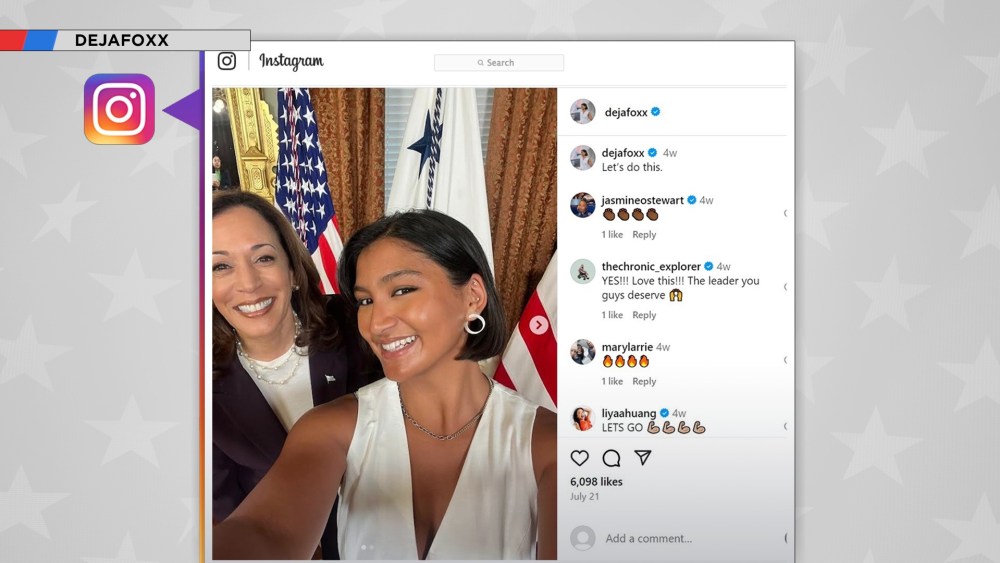
During the 2024 election, content creators were invited to both the Democratic and Republican National Conventions, taking selfies with candidates and attending events catered to sparkle on social media. The groups paying influencers to create content and covering their travel to events such as the DNC and RNC hope it creates a grassroots feel online that brings voters to the polls, according to a strategists.
Payments between these political organizations and creator groups are publicly disclosed in campaign filings, and the fact that political groups on all sides are investing in social media is clear. Since December, the National Republican Senatorial Committee and National Republican Congressional Committee have disclosed nearly $136,000 in payments to Creator Grid, a firm that, according to its website, “connects Republican candidates with the internet’s most powerful conservative influencers.”
Across the aisle, ARS Media, whose website says its “expertise includes working with high-profile surrogates and influencers to expand the reach of Democratic campaigns,” received more than $92,000 from various campaigns and political action committees over the past year and a half for items such as “social media services,” “social media consulting” and “communications consulting.”
ARS Media LLC says the payments were for consulting services, “not for creator or influencer work.”
The financial relationship between influencers and political groups is often invisible to viewers who are not digging into those financial disclosures.
Influencers face stricter rules when promoting skincare than when promoting political candidates or causes.
Critics say the disclosure gap leaves voters in the dark and could allow politicians, their parties and related entities to manipulate audiences.
“There’s really no way to distinguish organic messages that the influencer is putting out there on their own, of their own volition. versus when they’re being, essentially, a paid mouthpiece for somebody else,” Saurav Ghosh, director of federal campaign finance reform at the Campaign Legal Center, told MS NOW.

In October, his organization petitioned the FEC to require campaign finance disclosures on influencers’ paid political content. The Brennan Center for Justice also called on the FEC to adopt updated rules requiring transparency for paid influencer promotions and other nontraditional media, and earlier this month, Rep. Mark Takano, D-Calif., introduced a bill to require any person who is paid by a political committee or candidate to include a disclaimer that they were paid to post content.
Political strategists and social media agencies alike can see the benefits of not disclosing that content is sponsored. Raphael Orleck-Jetter, a talent manager at UnderCurrent, an influencer agency, understands when campaigns and PACs explicitly ask his clients not to disclose paid political content.
“There certainly is the element of the video performance, where, you know, they’re worried that a disclosure is going to affect how the video performs in the algorithm, and there’s the side of it that is genuinely, like, they want a grassroots feel to it,” Orleck-Jetter told MS NOW.
For the content, price is hardly an issue.
“I’ve been quoted over $200,000 for one video in the past” for political content, Orleck-Jetter told MS NOW. Recently, a client signed a deal for $40,000 to create four posts for election-related social media.
Earlier this year, Comstock said she received an offer of $36,000 from a Republican-affiliated organization to create posts that will reach her more than 1.7 million followers on TikTok and over 503,000 followers across her two Instagram accounts. Ultimately, Comstock passed it up due to her own political alignment.
While she can often discern what side of the aisle is making her an offer, Comstock sometimes does not know exactly where the money is coming from.
“Sometimes I can’t tell, you know, like if it’s an organization or a PAC or a (c)3, (c)4,” Comstock told MS NOW.
Other times, Comstock says it is even less clear what a group’s agenda is. She was once offered a content deal for an organization wanting her to promote a third-party candidate, only to learn that the organization was running interference against the opposite party.
Following the money is further complicated by the different forms of payment influencers may receive — whether it is a direct payment for a post, paying influencers to attend at an event or giving access to candidates and elected officials with the unwritten expectation to create content.
Democratic strategist Mike Cesaro said firms are not trying to cover their tracks by circumventing a contract — there is no requirement that they do, so it is simply easier to get content up quickly and can be more cost efficient for agencies.
“It could be just laziness or like not wanting to put all that legal agreement stuff together,” Cesaro told MS NOW.
The lack of disclosure is also a sticking point for influencers worried about maintaining an authentic voice online, even if a campaign or issue is still personally important to them.
“I do know creators who work with PACs and are specifically told not to disclose,” Comstock told MS NOW. “We need to put responsibility on these campaigns.”
Influencer Ava Noe, who creates content and promotes traditional beliefs on Instagram, posts more about products than she does politics. Whether creating content about Turning Point USA, where she partners with Club America, or posting about her red-light glasses, Noe prioritizes transparency with her audience.
“I think it’s super important to disclose when you’re paying to promote something,” Noe told MS NOW. “You’re getting paid for your opinion and to, like, push a certain agenda, so I think that definitely should be disclosed.”
Politicians are also taking issue with the lack of regulation, with House Oversight and Government Reform Committee Chair James Comer, R-Ky., investigating the Chorus influencers program over reports that the nonprofit was paying liberal influencers $8,000 per month to create content and explicitly asking them not to disclose the payments to their audiences.
But legal experts say Chorus cannot break a law that does not exist.
“The FEC doesn’t presently have a regulation requiring influencers’ paid political content to feature a ‘paid for by’ disclaimer, so a political group contracting with influencers can require that they not disclose the fact that they’re being paid to post or promote content,” Ghosh told MS NOW. “The influencers can always refuse that kind of secrecy clause in a contract, but there’s no federal law that such a term would contravene.”
The post Influencers wooing young voters earn big bucks under the radar appeared first on MS NOW.