
The latest example of Trumpian economic cluelessness came this week courtesy of Agriculture Secretary Brooke Rollins. While promoting the new federal nutrition guidelines on Thursday, Rollins — estimated net worth: $15 million — took pains to point out that it doesn’t cost much to eat healthy.
After all, she said, a meal consisting of a piece of chicken, a “piece” of broccoli, a corn tortilla and “one other thing” could cost as little as $3.
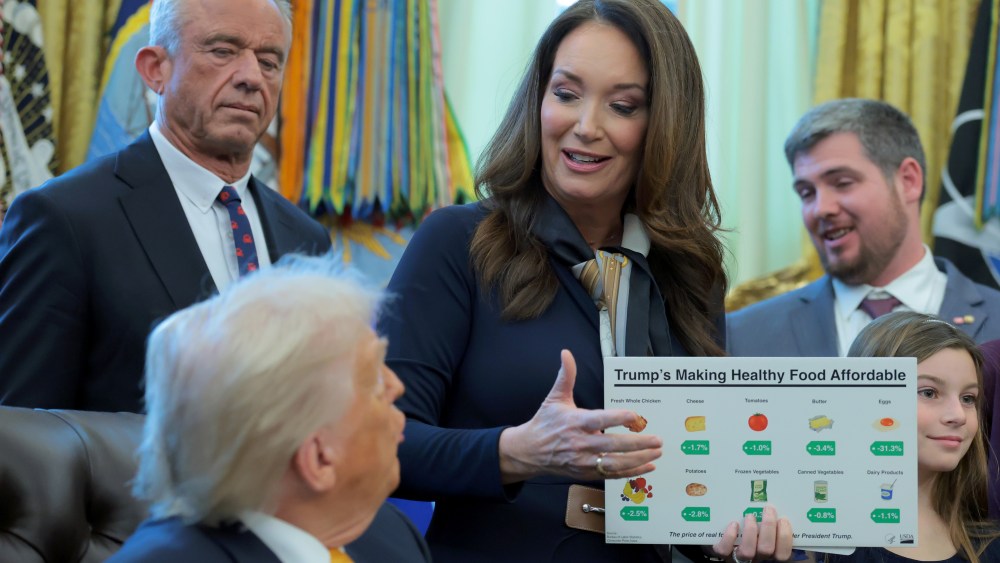
Rollins, seemingly unaware that this meal sounded like the dinnertime version of sackcloth and ashes, added that the Agriculture Department had run “over 1,000 simulations” to come up with the meal.
Apparently, no one involved in the project thought to interview actual Americans to see what they thought — or, for that matter, whether they might want a second helping of broccoli.
The contretemps was a gimme for online masses, who swiftly began guessing what that optional fourth item might be while cooking up quips like “let them eat broccoli” and speculating what would happen if, a la Oliver Twist, a cash-strapped diner had the temerity to ask for seconds.
As Rollins’ remark showed, vast wealth can leave its possessors blind to the economic struggles and reality of ordinary American life.
President Donald Trump, who has assembled the wealthiest presidential cabinets ever, has said that it’s best to take economic advice from a rich person. As Rollins’ remark showed, vast wealth can leave its possessors blind to the economic struggles and reality of ordinary American life.
The Trump administration has proven this over and over again. Trump himself — who inherited his fortune yet convinced himself he had earned it — has struggled to address Americans’ unhappiness with cost of living. He’s alternately told people to sacrifice and buy less stuff (a message that doesn’t go over well in the U.S., where shopping counts as a recreational activity) and other times flat-out lied, claiming, for example, that food prices are falling.

In fact, the price of beef, fish and chicken has increased almost 7% over the past year. Beef alone is up by slightly more than 16%, while the price of coffee has increased almost 20%.
Meanwhile, Trump has made it harder for Americans to pay for groceries. He signed off on cuts to the Supplemental Nutrition Assistance Program — the formal name for food stamps — in favor of tax cuts for the wealthiest Americans in his signature One Big Beautiful Bill legislation, increasing food insecurity for millions of Americans. And his administration has not hesitated to use Americans’ food needs as a political bargaining chip, during the federal government shutdown and beyond. Last month Rollins threatened to withhold SNAP funds from states unless they revealed who was receiving the benefit and their immigration status.
In a country where an estimated 1 in 8 people is already experiencing food insecurity, this is — dare I say it? — tasteless behavior at minimum.

There are, of course, things Trump could do to tackle food inflation — and he should know because his administration has done so in the past. Last year, he directed the Justice Department to open an investigation into major egg producers, questioning whether they used market power to increase prices and their own corporate profits. Lo and behold, the wholesale cost of eggs dropped rapidly, something some observers attributed, at least in part, to the sudden investigative interest in the topic.
The Trump administration could also take on the hot topic of algorithmic pricing. A joint investigation by Consumer Reports and the left-leaning think tank Groundwork Collaborative reported in December that Instacart was charging some customers up to 23% more for grocery items ordered through its platform. Instacart almost immediately ceased selling the technology that allowed grocery stores to charge different prices for the same product at the same time, but clearly we can’t rely on voluntary actions by big business to get a grip on this burgeoning technology. Legislation is needed.
But back to Brooks’ chicken imbroglio. It shouldn’t take much in the way of political smarts to know that when you are peddling budget-saving tips in lieu of real action, it’s best to offer up suggestions people might actually want to try. Somehow it doesn’t seem likely that chicken with a piece — just one piece! — of broccoli is on the menu at the White House or at a Mar-a-Lago fete. A referral to McDonald’s, which we at least know the president likes, might have been more digestible.
But that’s the thing about government by the wealthiest of Americans, for the wealthiest of Americans. They don’t realize their so-called financial advice is ineffective, in bad taste — and a recipe for political unhappiness.
The post What the Brooke Rollins $3 meal meme shows about Team Trump’s economic blindness appeared first on MS NOW.