
Chief Justice John Roberts famously said the U.S. Supreme Court’s role is “calling balls and strikes,” suggesting a narrow mandate of doing just enough to enforce constitutional rules. But in redistricting cases, the court’s conservative supermajority has gone further, wielding its power in ways that have entrenched decidedly partisan outcomes, largely at the expense of voters of color. This troubling pattern has been evident in recent rulings, and we may see more of it this term.
Last month, the Roberts Court upheld Texas’ redrawn maps despite evidence that the Republican legislature diluted Latino and Black voting power. And in a case to be decided this term, Louisiana v. Callais, the justices are considering whether to strike down Section 2 of the Voting Rights Act, a critical protection against discriminatory maps. Eliminating the federal law that outlaws policies and practices whose effects discriminate against voters of color could undo four decades of civil rights enforcement.
A court that only calls balls and strikes might show restraint in a case like this.
A court that only calls balls and strikes might show restraint in a case like this. But this court’s tendency is quite different.
Perhaps the most prominent voting rights decision in the Roberts Court record is its 2013 ruling in Shelby County v. Holder. This decision ended the practice of “preclearance,” effectively dismantling another key part of the Voting Rights Act that required federal approval for voting changes in places with a history of racial discrimination. More than half the changes blocked under this system have involved election maps.
The Shelby County ruling declared that such discrimination was no longer a pressing concern and that the review provision was no longer justifiable. Never mind that a bipartisan Congress renewed the law in 2006 based on a record with ongoing examples of the kind of discriminatory policies that preclearance had successfully blocked.

The court’s analysis has proven misguided, and its consequences for voters of color have been predictably dire. Since Shelby County, the turnout gap between white and nonwhite voters has grown the fastest where preclearance had previously been enforced. Voters of color, facing a flood of new practices and laws that make voting more difficult, cast ballots less often relative to white voters. This growing gap in racial turnout confirms Justice Ruth Bader Ginsburg’s analysis in her dissent that dismantling preclearance was “like throwing away your umbrella in a rainstorm because you are not getting wet.”
Six years later, in Rucho v. Common Cause, the Roberts Court greenlit the process of rigging election maps explicitly designed to favor a political party. In Rucho, the court announced it had no authority to stop one of the most blatant partisan gerrymanders in North Carolina’s history, even after state legislators admitted to drawing as many Republican seats as possible. Roberts’ majority opinion held that partisan gerrymandering claims were “nonjusticiable,” meaning federal courts could not consider them, in North Carolina or anywhere else.

The court qualified its ruling by noting that racial gerrymanders remained unconstitutional. But while justices signaled disfavor toward partisan gerrymandering, Rucho opened the door to racial discrimination in maps disguised as partisanship. Because race and party affiliation are often correlated, especially in the South, the court’s retreat has made it easier for states to craft bolder gerrymanders and to insulate them from scrutiny by claiming partisan motives. A 2023 ruling in Alexander v. South Carolina State Conference of the NAACP has made things worse. There, the court ignored the fact that the legislature had targeted Black voters on the view that legislatures enjoyed a good-faith presumption of fairness when drawing maps.
Because race and party affiliation are often correlated, especially in the South, the court’s retreat has made it easier for states to craft bolder gerrymanders and to insulate them from scrutiny by claiming partisan motives.
While its abdication in Rucho has encouraged more brazen mapping strategies, the Roberts Court has also actively stepped into redistricting disputes that delay relief for voters of color. In Allen v. Milligan, a Voting Rights Act case in 2023, the justices placed on hold a unanimous lower court ruling in Alabama that held the state legislature had violated Section 2’s bar against unfairly dispersing voters of color.
Even after a district court ordered Alabama to adopt a lawful map, the legislature refused. Despite Alabama’s defense of a map with concrete legal harms to Black voters and its open defiance of a court order, the Supreme Court ordered — through its emergency docket —that the map remain in place for a full congressional term. The court eventually affirmed the panel’s original ruling, but Alabama voters faced a delay in getting fair representation.
Last year, amid a national spectacle of frenzied redistricting efforts, the Supreme Court intervened to leave in place Texas maps that targeted voters of color. Trial judges had concluded that the state legislature had purposefully limited Black and Latino voting strength at the specific — and, according to the district court, legally suspect — direction of the Justice Department. The facts resemble racial cases in which conservatives blocked the work of Democratic legislatures in the 1990s. The Texas district court cited many of these earlier cases in its well-footnoted opinion.
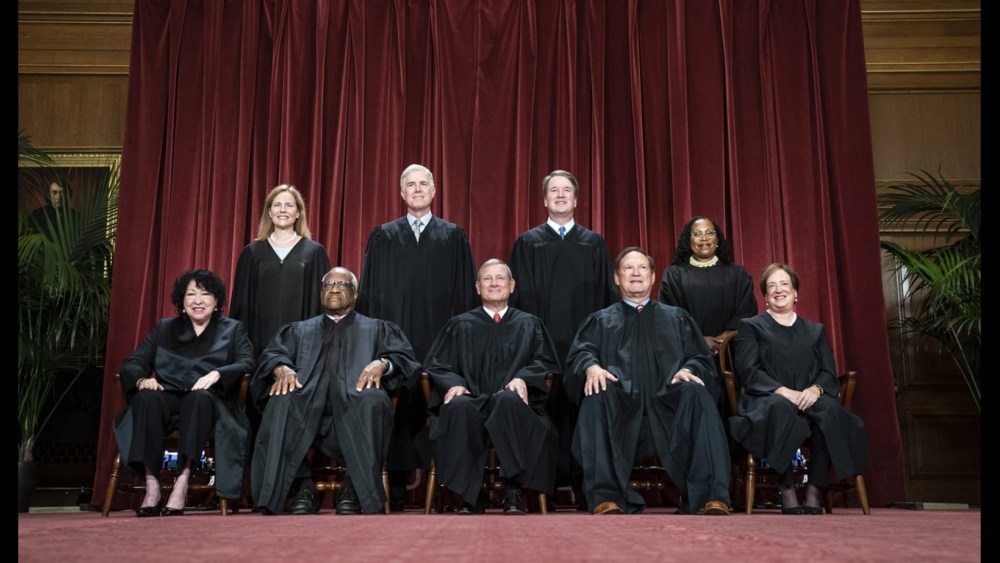
The Roberts Court not only placed the lower court’s decision on hold but, building on Rucho and Alexander, afforded greater deference to the legislature’s choices because of the good-faith presumption. By accepting the asserted partisan motives of Texas Republicans, the Supreme Court undercut significant evidence showing that racial motivations inspired their choices, according to Justice Samuel Alito’s concurrence.
This is the backdrop to Callais. Last spring, the Supreme Court considered whether Louisiana’s approach to crafting a second majority-black congressional district was constitutional. Instead of deciding that question on the merits, the justices ordered reargument focusing on the constitutionality of Section 2, now one of the last remaining weapons to address discrimination. Oral argument was heard in October, and a decision is expected this term.
If the court invalidates Section 2 of the Voting Rights Act, the decision could unleash chaos at every level of government. Multiple states, including North Carolina and Louisiana, are already plotting new rounds of redistricting that could severely undermine the political representation of voters of color. These effects could spread to state and local districts as well.
Far from calling balls and strikes, the Supreme Court’s record shows a pattern of altering fundamental rules for our system of elections — and undoing the historical role of the judicial branch as a key protector of the right to vote.
The post How Supreme Court rulings on redistricting have undermined voters of color appeared first on MS NOW.